Preparation
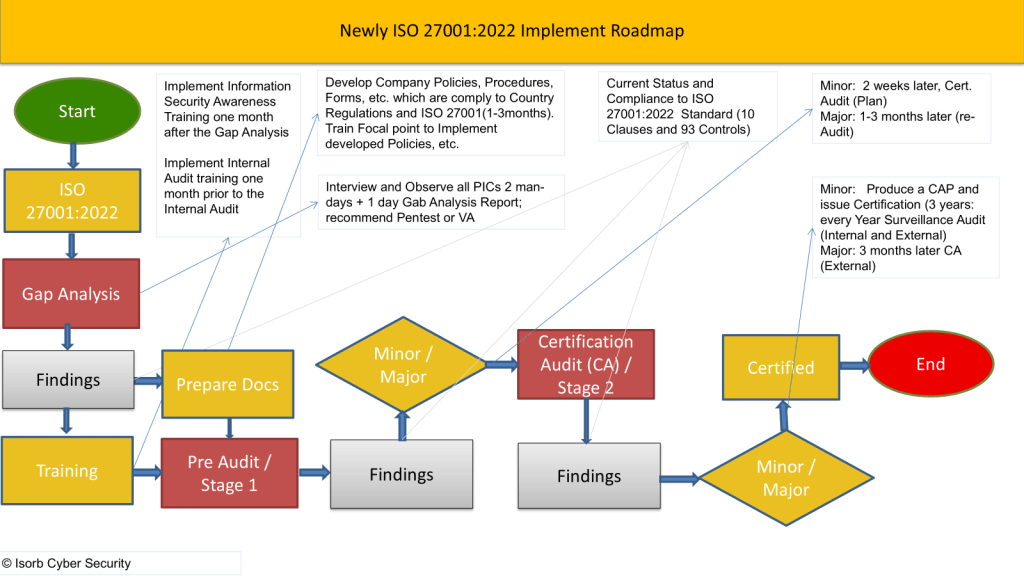
Robust preparation is essential for organizations in high-risk and regulated industries to confidently embark on the implementation of ISO/IEC 27001:2022. Whether operating in fintech, software development, digital assets, mining, or crowdfunding, the steps outlined below will help establish a solid foundation for an effective Information Security Management System (ISMS):
Gap Analysis
The process begins with a gap analysis to assess the organization’s current security controls against the requirements of ISO/IEC 27001:2022. This step is especially critical for sectors dealing with sensitive data, digital transactions, and regulatory obligations. The analysis identifies areas of non-compliance, weaknesses in existing processes, and opportunities for improvement. This clarity allows for informed decision-making and focused resource allocation as the organization moves toward certification.
Top Management Commitment and Responsibility
Leadership support is crucial, especially in industries where trust, compliance, and operational resilience are key. Top management must not only endorse the ISMS initiative but also take ownership by allocating necessary resources, integrating information security into strategic decisions, and setting the tone for a security-first culture. For example, in fintech or crypto startups, this may mean embedding security into DevSecOps pipelines, while in insurance or mining, it could involve aligning ISMS goals with broader risk management frameworks.
Implementation Plan
A structured implementation plan ensures consistency and accountability. It should outline the scope, timelines, key milestones, required personnel, and success metrics. In fast-moving sectors like software development and crowdfunding platforms, this plan helps balance agility with compliance. The roadmap also enables clear communication across departments, reducing friction and aligning efforts across technical and non-technical teams.
Implementation Team and Awareness Training
Establishing a capable implementation team is key. Team members should bring a mix of technical expertise (e.g., cybersecurity, system architecture, DevOps) and domain knowledge relevant to your industry. Alongside this, targeted security awareness training must be delivered to all staff — from developers and financial analysts to miners and customer service reps. Training programs should be customized to the organization’s risk profile, ensuring every employee understands their role in safeguarding information assets and supporting ISO/IEC 27001:2022 implementation.
 Welcome to PT Isorb Cyber Security